Zimbabwe Dry Season Overview: May to October 2026
Zimbabwe’s dry season spans May to October and represents the absolute best time for safari. As rainfall stops and water sources shrink, wildlife concentrates around rivers, waterholes, and dams – creating some of Africa’s most dramatic wildlife encounters. This is the peak safari season, and for good reason.
The dry season divides into two distinct phases: the cool dry season (May-July) with temperatures of 15-25C, and the hot dry season (August-October) when temperatures climb to 35C+ but wildlife viewing remains exceptional.
Cool Dry Season (May-July)
May through July brings Zimbabwe’s most comfortable temperatures. Days are warm (20-25C) and sunny, nights drop to 10-15C. Vegetation thins rapidly as the last rains evaporate. Wildlife begins concentrating at permanent water sources. July is peak tourist season – book accommodation 3-6 months in advance.
Hot Dry Season (August-October)
August through October sees temperatures rise dramatically. Days reach 35-40C in the Zambezi Valley. However, this is arguably the best wildlife viewing period – water sources dwindle to a handful of locations, forcing massive concentrations of animals. October is called the “suicide month” by locals due to extreme heat but delivers unforgettable safari experiences.
Best Wildlife Viewing Months in Zimbabwe 2026
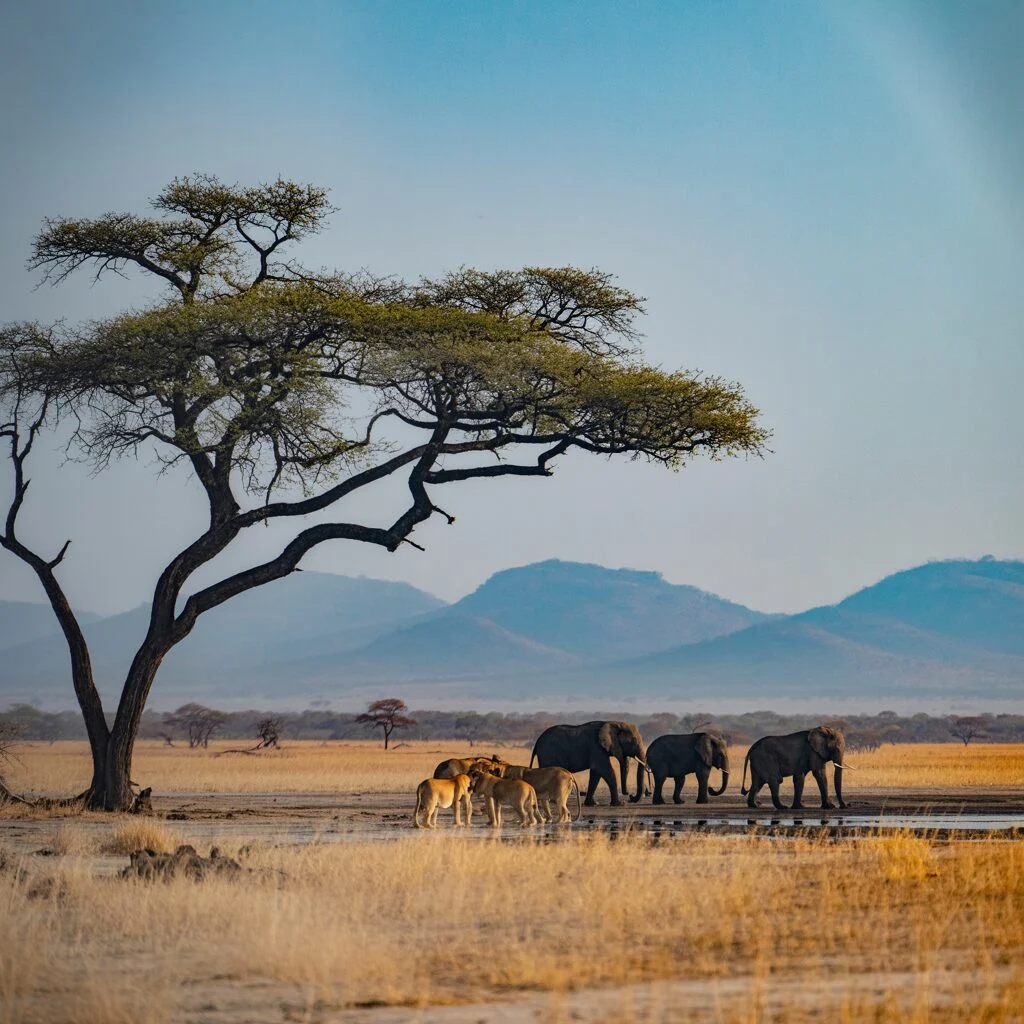
June through October provides optimal game viewing as animals concentrate at water sources. The sparse, leafless vegetation means nothing hides – elephants, lions, buffalo, and wild dogs are easily spotted from game drive vehicles.
Hwange National Park – The Elephant Season
Hwange National Park hosts one of Africa’s largest elephant populations – an estimated 40,000+ elephants. During August-October, these herds concentrate around the park’s man-made waterholes in breathtaking numbers. It is not uncommon to see 200+ elephants at a single waterhole at dusk. This is a genuinely world-class wildlife experience that few destinations can match.
Hwange’s pump-fed waterholes (maintained since the colonial era) are the key to this spectacle – they provide water when natural sources dry up, drawing animals from vast distances.
Mana Pools – UNESCO World Heritage Safaris
Mana Pools National Park is a UNESCO World Heritage Site on the Zambezi River. In the dry season (August-October), the floodplains become an extraordinary wildlife corridor. Walking safaris and canoe safaris on the Zambezi are unique experiences not available at most African parks. Wild dogs breed here and are frequently seen during August-September.
Zimbabwe Dry Season Month-by-Month Guide
May – Shoulder Season Value
May is an excellent value month – rains have ended, vegetation is still relatively green, and prices are lower than peak. Wildlife viewing improves steadily through the month. Temperatures: 20-28C. Recommended for budget-conscious safari travelers.
June-July – Peak Season Begins
June and July are the most popular safari months. Perfect temperatures, excellent game viewing, and the widest availability of activities. Expect to pay peak rates and book well in advance. Victoria Falls has good water levels through June-July.
August-October – Prime Wildlife Time
The hottest and driest months deliver the most concentrated wildlife viewing. Elephants at waterholes, predators hunting weakened prey, and dramatic landscapes define this period. October is the most intense – extreme heat but extraordinary encounters.
Victoria Falls in the Dry Season
Victoria Falls’ water levels drop through the dry season as the Zambezi drains. By September-October, the Zimbabwe side of the falls can be quite reduced in flow. However, the dry season offers advantages:
- Less spray – viewpoints are accessible without waterproof clothing
- Devil’s Pool is open – the iconic swimming pool at the edge of the falls operates September-December
- Clearer photography – rainbow-filled views without mist obscuring everything
- Activities available – white-water rafting, zip-lining, and bridge activities operate fully
Planning Your Zimbabwe eVisa for Dry Season Travel 2026
The dry season (especially July-October) sees the highest application volumes for Zimbabwe eVisas. Apply at least 3 weeks before your travel date to ensure approval arrives in time.
The Zimbabwe eVisa is available entirely online. There are two main options:
- Single entry visa: USD 30 – valid for 30 days from entry
- KAZA Univisa (double entry): USD 55 – covers Zimbabwe and Zambia, ideal if visiting both sides of Victoria Falls
Processing typically takes 5-10 business days but can extend during peak periods. Apply early to avoid travel disruption. Full details on the Zimbabwe eVisa page.
eVisa Application Step-by-Step
- Visit the official Zimbabwe eVisa portal
- Complete the online application form with passport details
- Upload a passport photo and passport bio page scan
- Pay online (USD 30 or USD 55)
- Receive approval email (5-10 business days)
- Print and carry approved eVisa to Zimbabwe border/airport
Dry Season vs Rainy Season – Which Is Better for Zimbabwe?
The honest answer depends on your priorities:
- Wildlife safari: Dry season (June-October) wins decisively
- Victoria Falls: Rainy season (Feb-April) for maximum power; dry season for clearer views and Devil’s Pool
- Budget: Rainy season (Nov-April) offers 20-40% lower prices
- Crowds: Rainy season is significantly quieter
- Overall experience: Dry season for first-time visitors who want reliable wildlife encounters
For comparison, see our guide to Zimbabwe rainy season travel.
Packing for Zimbabwe’s Dry Season Safari
- Neutral colors: Khaki, olive, beige – avoid white and bright colors on safari
- Layers: Warm fleece or jacket for cold early morning game drives (May-July)
- Sun protection: High-SPF sunscreen, hat, and UV-protective clothing
- Binoculars: Essential for game drives
- Camera equipment: Dust protection bags for cameras (very dusty in Oct)
- Insect repellent: Still recommended even in dry season
- Comfortable walking shoes for bush walks
Frequently Asked Questions – Zimbabwe Dry Season Safari
When is the best time for a safari in Zimbabwe?
The best time for a Zimbabwe safari is June to October during the dry season. Wildlife concentrates at water sources and vegetation is sparse for easy game viewing. Peak wildlife viewing occurs August-October when Hwange waterholes attract massive elephant herds.
How many elephants are in Hwange National Park?
Hwange National Park has an estimated 40,000+ elephants – one of Africa’s largest elephant populations. During August-October, hundreds of elephants concentrate at the park’s pump-fed waterholes.
When should I apply for Zimbabwe eVisa for dry season travel?
Apply at least 3 weeks before your dry season travel date. Peak season (July-October) sees higher application volumes and processing can take up to 10 business days.
Is Devil’s Pool open during the dry season?
Yes, Devil’s Pool at Victoria Falls operates approximately September to December when water levels allow safe swimming. The pool is closed during rainy season high water.
What is the weather like in Zimbabwe in July?
July is cool and dry – daytime temperatures reach 20-25C, nights drop to 5-10C requiring a jacket. No rain falls. This is peak tourist season – book accommodation well in advance.
Can I do a walking safari in Zimbabwe?
Yes, Zimbabwe is one of Africa’s best destinations for walking safaris. Mana Pools National Park is renowned for guided walks on the Zambezi floodplains, operating primarily May-October.
Is October too hot to visit Zimbabwe?
October reaches 40C in the Zambezi Valley but delivers the most dramatic wildlife viewing of the year. Morning game drives starting at 6am avoid peak heat. The Eastern Highlands offer cooler alternatives.