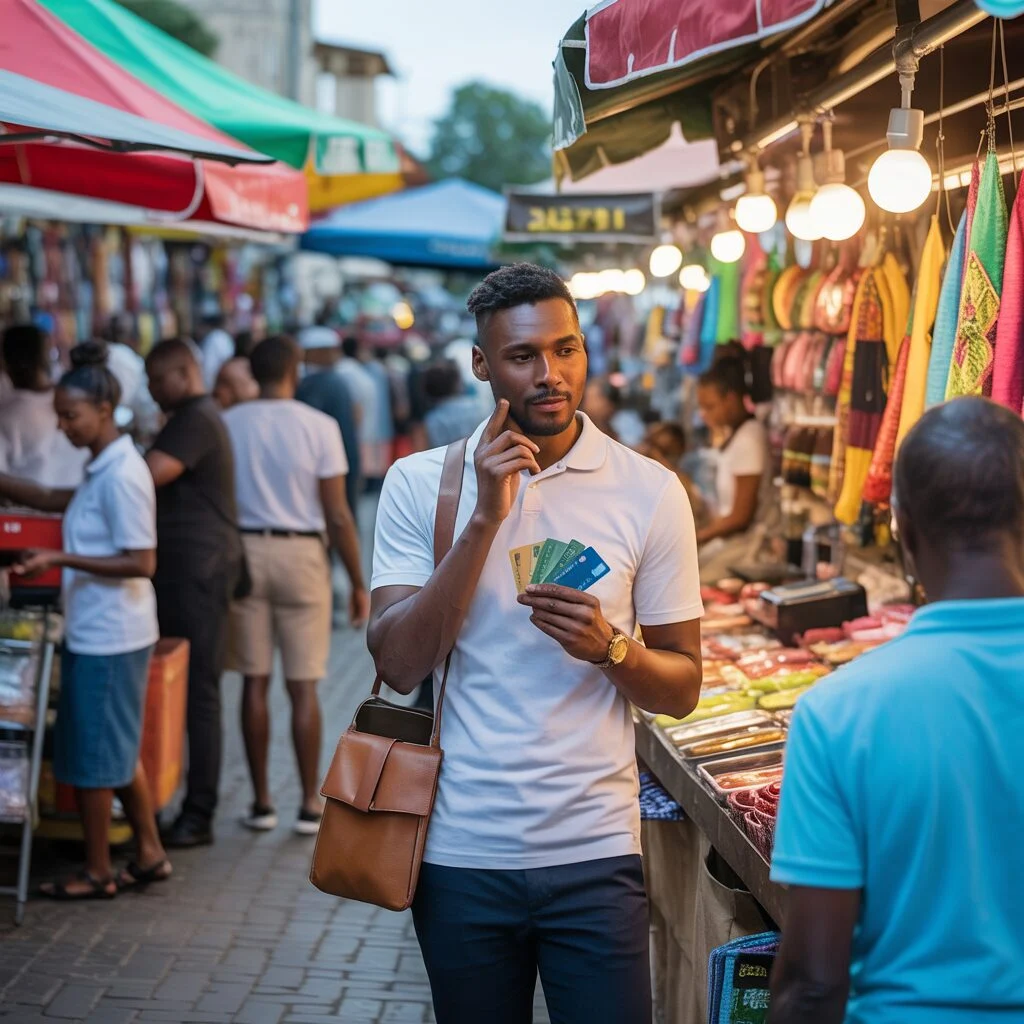
In Zimbabwe, cash is king – USD bills dated post-2006 are essential for most transactions. Credit cards work only at major hotels and select supermarkets in Harare and Bulawayo; ATMs frequently decline international cards. Bring at least $200-300 USD cash as backup for any Zimbabwe trip.
Why Cash Dominates in Zimbabwe
Zimbabwe’s payment landscape is unlike almost anywhere else in the world. After decades of hyperinflation and currency instability, the country adopted the US dollar as its primary currency in 2009. Today, cash – specifically USD bills – remains the dominant payment method for the vast majority of transactions.
Most local markets, street vendors, smaller restaurants, rural guesthouses, national park entry points, and informal businesses operate on a cash-only basis. Even in Harare and Bulawayo, many mid-size shops prefer cash to avoid card processing fees and unreliable connectivity.
Mobile money (EcoCash) is popular among locals, but international travelers cannot easily access these systems without a local SIM card and bank account. For tourists, cash is the practical default.
The USD-Only Rule
Zimbabwe uses multiple currencies – the Zimbabwean Gold (ZiG) is the official local currency, and South African Rand (ZAR) is accepted near the borders. However, USD is by far the most universally accepted currency for tourists and is required at most hotels, lodges, national parks, and tourist services. Always exchange money to USD before arriving or bring USD from home.
Do Credit and Debit Cards Work in Zimbabwe?
Cards are not useless in Zimbabwe, but they are unreliable. Visa and Mastercard are accepted at select locations – primarily upscale hotels, lodges, major supermarkets (OK Zimbabwe, Pick n Pay), and some fuel stations. Outside of these specific venues, card acceptance drops sharply.
Card terminals exist but connectivity issues, power outages, and banking system glitches mean that even where cards are accepted, transactions may fail. Always have cash as a backup whenever you plan to pay by card.
Visa and Mastercard Acceptance
Visa and Mastercard are the two card networks with the most presence in Zimbabwe. Accepted locations typically include:
- 4-5 star hotels and resorts (Meikles Hotel, Rainbow Towers, Elephant Hills)
- Major supermarket chains in Harare and Bulawayo
- Some filling stations (Total, Puma)
- Airport shops and car rental companies
- Tour operators catering to international visitors
Amex – Leave It at Home
American Express (Amex) is rarely accepted anywhere in Zimbabwe. The same applies to Diners Club and Discover. If Amex is your primary card, make sure to bring a Visa or Mastercard as well – or plan to rely on cash entirely. Don’t assume a hotel will accept Amex just because it looks upscale.
Where Cards Are Most Likely to Work
Your best chances of successful card transactions are in Harare (especially in Borrowdale and Avondale districts) and at Victoria Falls tourist facilities. In smaller towns like Mutare, Masvingo, or Kariba, card acceptance is very limited. In rural areas and national parks, assume cash-only.
The USD Note Problem – Why Old Bills Get Rejected
Zimbabwe only accepts US dollar bills printed after 2006 (Series 2006 or later). This is one of the most important and least-known facts for travelers. Older USD bills – including Series 2001, 2003, and pre-2006 notes – are routinely refused by merchants, money changers, and even banks.
This policy stems from Zimbabwe’s hyperinflation era when older bills were hoarded or counterfeited. The practice of rejecting old notes has persisted even though the USD is now the dominant currency. Don’t bring your old $100 bills.
Which Note Years Are Accepted
- Accepted: Series 2006, 2009, 2013, 2017, 2021 (the year appears on the front of the note)
- Rejected: Series 1996, 1999, 2001, 2003, and sometimes Series 2004
- Special note: $100 bills face extra scrutiny – some merchants only accept 2013 or newer $100 notes
What to Do If You Have Old USD
Exchange old USD bills at your bank before traveling. Major US and European banks can exchange old USD notes for new ones. Once in Zimbabwe, exchanging old notes is very difficult and you may not get face value.
ATMs in Zimbabwe – What to Expect
International cards frequently fail at Zimbabwean ATMs – treat cash withdrawals as a bonus, not a plan. ATM networks are limited, machines are often out of cash, and connectivity issues cause many transactions to decline even when funds are available.
Don’t rely on ATM withdrawals as your primary cash strategy. Bring the cash you need from home or exchange it before arriving in Zimbabwe.
Which Banks Have ATMs
Banks with ATMs that sometimes accept international cards:
- Standard Chartered Zimbabwe – most reliable for international cards (Harare)
- Stanbic Bank – Visa/Mastercard withdrawals occasionally work
- CABS (Central Africa Building Society) – widely distributed but reliability varies
- Ecobank – part of pan-African network, better international card compatibility
CBZ Bank and ZB Bank are primarily domestic and rarely work with international cards.
Daily Withdrawal Limits
If you do manage a successful ATM withdrawal, expect limits of $100-200 per transaction. Some machines cap at $50. Daily limits are typically $300-500 for international cards.
How Much Cash Should You Bring?
Budget travelers need $50-80/day; mid-range travelers $150-250/day; safari-focused travelers should carry $300-600/day in USD cash. Add a 20-30% buffer for unexpected expenses and emergencies.
Budget Breakdown by Trip Type
| Traveler Type | Daily Budget | Recommended Cash for 7 Days |
|---|---|---|
| Budget/Backpacker | $50-80/day | $400-600 |
| Mid-Range | $150-250/day | $1,100-1,800 |
| Luxury/Safari | $300-600+/day | $2,200-4,500+ |
These amounts assume you’re also using cards where available (reducing actual cash needed). If you plan to rely entirely on cash, increase these figures by 15-20%.
For more detailed budget planning, see our guide: How Much Money to Bring to Zimbabwe.
Small Bills Are Crucial ($1, $5, $10)
Carry a significant portion of your cash in $1, $5, and $10 bills. Zimbabwe has a chronic change shortage – many vendors cannot break $50 or $100 bills. If you only have large notes, you’ll either overpay or find yourself unable to make small purchases.
A good strategy: bring 40% of your cash in $1 and $5 bills, 40% in $10 and $20 bills, and only 20% in $50 and $100 bills (used only for hotels and large bookings).
Best Cards for Zimbabwe Travel
Revolut, Wise, and Charles Schwab are the most reliable international cards to bring alongside cash. These cards offer low/no foreign transaction fees and can be used where Visa/Mastercard is accepted.
- Revolut – Virtual and physical Visa/Mastercard; freeze/unfreeze instantly; good exchange rates
- Wise – Prepaid Mastercard with real exchange rates; great for eVisa payment too
- Charles Schwab (US travelers) – Refunds all ATM fees worldwide, including failed attempts
- Starling Bank (UK travelers) – No foreign transaction fees; Mastercard network
If you want to pay for your Zimbabwe eVisa without a traditional credit card, see our guide: How to Pay for Zimbabwe eVisa Without a Credit Card.
Frequently Asked Questions
Can I use my credit card in Zimbabwe?
Yes, but with significant limitations. Visa and Mastercard are accepted at major hotels, select supermarkets, and some tourist services in Harare and Victoria Falls. Amex and Diners Club are rarely accepted. Always carry USD cash as a backup because card transactions frequently fail due to connectivity issues.
Why are old US dollar bills rejected in Zimbabwe?
Zimbabwe only accepts USD bills from Series 2006 or later. Older notes (pre-2006) are rejected due to policies dating back to the hyperinflation era. Always check the series year on your USD bills before traveling – it’s printed on the front of the note.
Do ATMs work in Zimbabwe with international cards?
Sometimes, but unreliably. Standard Chartered and Ecobank ATMs have the best track record for international cards. However, machines are frequently out of cash, and connectivity issues cause many transactions to fail. Never rely on ATM withdrawals as your only cash plan – bring sufficient USD from home.
How much cash should I bring to Zimbabwe?
Budget travelers need approximately $50-80/day ($400-600 for a week). Mid-range travelers should budget $150-250/day ($1,100-1,800 for a week). Safari and luxury travelers need $300-600+/day. Add a 20% buffer for emergencies. Bring plenty of small bills ($1, $5, $10) as change is scarce.
Does American Express work in Zimbabwe?
No. American Express is not accepted at most establishments in Zimbabwe. Bring a Visa or Mastercard as your backup card, or plan to use USD cash. Amex is accepted at a tiny handful of luxury properties, but you cannot rely on this.
What currency should I bring to Zimbabwe?
Bring US dollars (USD). The USD is the dominant currency for tourists in Zimbabwe. South African Rand (ZAR) is accepted near the South African border. The local ZiG currency is used by locals but tourists rarely need it. Always carry USD in post-2006 notes.
Where can I exchange money in Zimbabwe?
Currency exchange is available at Harare International Airport, major banks (Standard Chartered, Stanbic, Ecobank), and licensed Bureau de Change offices in Harare and Bulawayo. Exchange rates are generally close to the official rate. Avoid street money changers as this is illegal and risky.
Can I pay for my Zimbabwe eVisa by card?
Yes – the Zimbabwe eVisa portal accepts Visa and Mastercard (including debit cards and virtual cards like Revolut and Wise). Amex is not accepted. The visa fee is $30 for single entry. See our full guide on paying for Zimbabwe eVisa without a traditional credit card.